ARŪNAS MOLIS: RED HERRING: LOCAL AND IMPORTED
2019-06-18
Company news
Fake news has already become a ubiquitous and universally understood concept across the public domain. Having shocked all those who grew up in those times when information published in the media was treated as an absolute truth, it has gradually made us aware of the ongoing information war.
For us, who had been behind the Iron Curtain, neither the fake news nor the red herrings have raised an eyebrow. For decades, we lived under the conditions of a thoroughly polished official informative background, where truth remained at best between the lines and, worse, between the bars. What could make us raise an eyebrow though is the social network-enabled speed and scope of fake news. Although the principles themselves have remained unchanged: the key is to either put something to doubt or to weave in false facts in the public opinion, which, through deliberate recurrence, would turn into the truth.
Why am I talking about it now? Anybody who has been at least a little bit more closely following the information space had to spot over the last few months the thickening – deliberate or non-deliberate – field of propaganda about the LNG terminal in Klaipėda. Most of the dubious information comes (and few will be surprised) from our neighbours in the east. However, victims or even deliberate disseminators of such propaganda, become not only the submissive media of our big neighbour or members of social networks, but also the opinion leaders who apparently have greater resilience. In principle, the arguments of propaganda break down into the following three groups: the operations of the LNG terminal in Klaipėda, its fate post 2024 or the future of the KN in general.
One of the more striking examples of the fake news is a seemingly accidental or lost in translation as it were statement by our Russian colleagues about gas allegedly supplied by Marshal Vasilevskiy to Klaipėda LNG Terminal in Lithuania. Anybody who is at least a little interested in the situation and follows the activities of this flagship of Kaliningrad region, sees that it is been out of operation. However, this is fully in line with the communication line tried-and-tested at the beginning of the year with the pompous start of its activities, spreading the message about stopping gas transit through Lithuania.
This is by far not a stand-alone case. Another example of a fairly crafted history, which has recently surfaced from the neighbouring countries crawling to our media, is the statement that KN’s LNG terminal controlling shares are about to be sold shortly. Allegedly to Germans or Russians. Versions are different. If the information is slipped by people who work with the information, then it scares stiff to think of information concentrated in the information shadows.
We can understand neighbours in the surrounding markets – they care about their own business, not Lithuania’s national interests. What is more difficult is trying to understand our colleagues in Lithuania, who help keeping up these wrong statements about the LNG terminal Klaipėda. Last Saturday, one of the dailies in its opinion column says: “Symbolically called Independence, the LNG terminal was consequently repurchased by the same Russians”. We all have the freedom of expression and opinion but what can we make of the opinion that spreads misleading and harmful information?
The main purpose of this information campaign is to prove that the terminal in Klaipėda will not create any competition whatsoever for the monopolist Gazprom. After all, it is left stranded and exists only on minimum gas regime secured only through state’s efforts. The coincidence of resurfacing of such remarks is ever more ironical when it happens at the time of the LNG terminal improving its operational records for three months in a row. 83 per cent of natural gas supplies to Lithuanian consumers came in April from Klaipėda LNG Terminal, and in May about 1.64 TWh gas was burned – approximately the same amount as was consumed in Lithuania. LNG Terminal’s stevedoring schedule also looks very promising in the months ahead – the gas terminal will continue to supply gas that will satisfy not only the total gas demand of consumers in Lithuania, but also provide opportunities for gas exports to Latvia over the remaining months of the year.
So willy-nilly one tends to believe that the spawning of all those red herrings – local or imported – means only one thing – that Lithuania is successfully moving towards its goals and taking the right course.
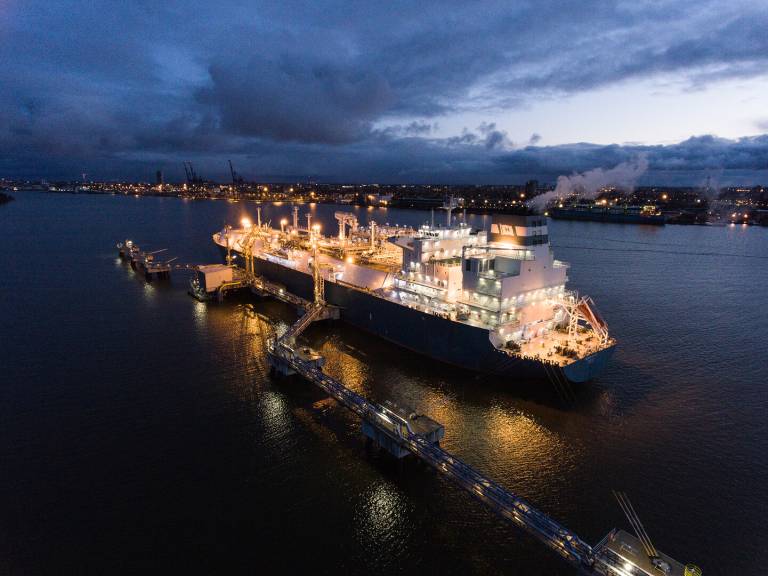
On Monday, a liquefied natural gas (LNG) cargo from the United Stats of America ordered by D.TRADING International SA, a subsidiary of DTEK Group, the largest private Ukrainian energy company, reached the Klaipėda LNG terminal operated by the international terminal operator KN Energies. Approximately 160 thousand cubic metres of U.S....
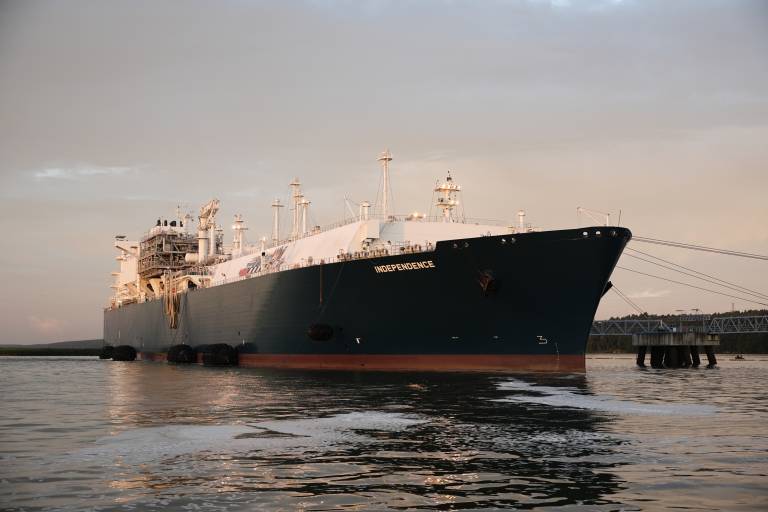
Exactly 11 years ago, on 27 October 2014, the liquefied natural gas (LNG) floating storage and regasification unit (FSRU) Independence reached the Port of Klaipėda. Lithuania’s liberation from the grip of a monopolist became not only an inspiration for the Baltic region but also ensured energy security and the right for consumers...
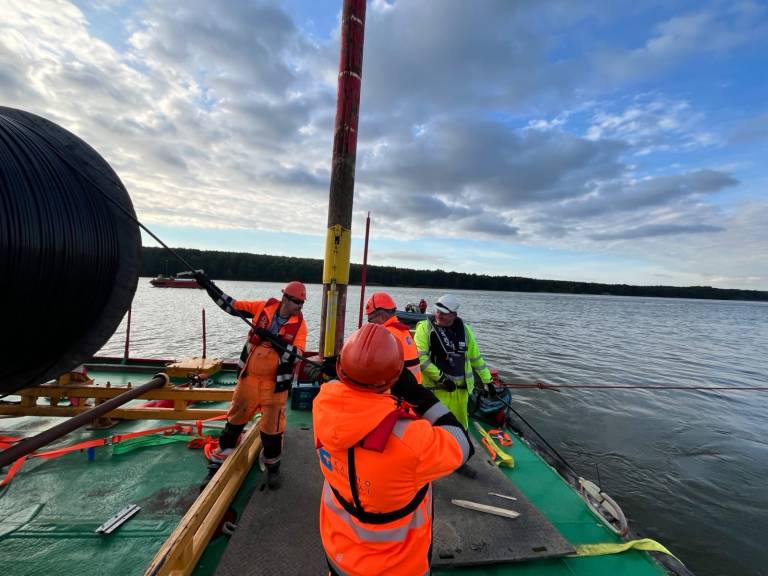
As part of the shore electricity connection project to the Klaipėda LNG terminal implemented by the international energy terminal operator KN Energies, the first works have begun. The company executing the project, Kauno tiltai, has started cleaning a pipe installed using the horizontal directional drilling (HDD) method and carrying out...